
Leadership authority means the power that leader have. there are many ways to explain the leadership authority. Hence, i chooses the way my instructor told me and i explained it from her power point presentation.
There are some views by which we can see the leadership authority:
- Top-Down View
- Bottom-Up View
TOP-DOWN VIEW:
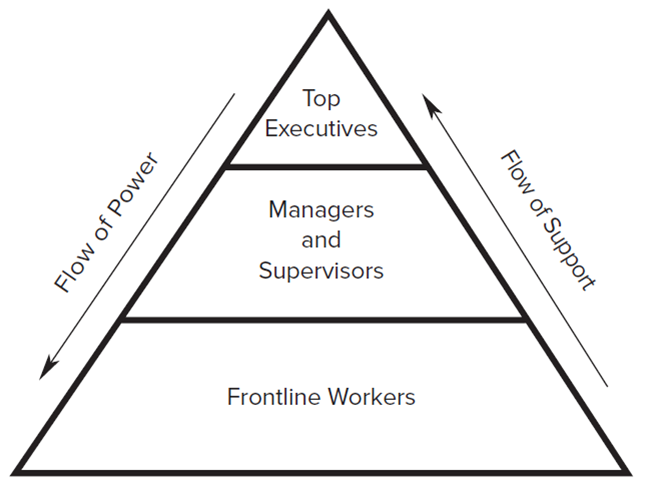
•Leadership authority is based on position in a social hierarchy
•Power flows from the highest level to the lowest
BOTTOM-UP VIEW:
•In an organizational pyramid, workers support managers and supervisors who in turn support executives
•Pyramid serves as the basis of most classical organizational structures
For more understanding their is a classical organizational structural of these views:
Traditional TOP-DOWN View of US:
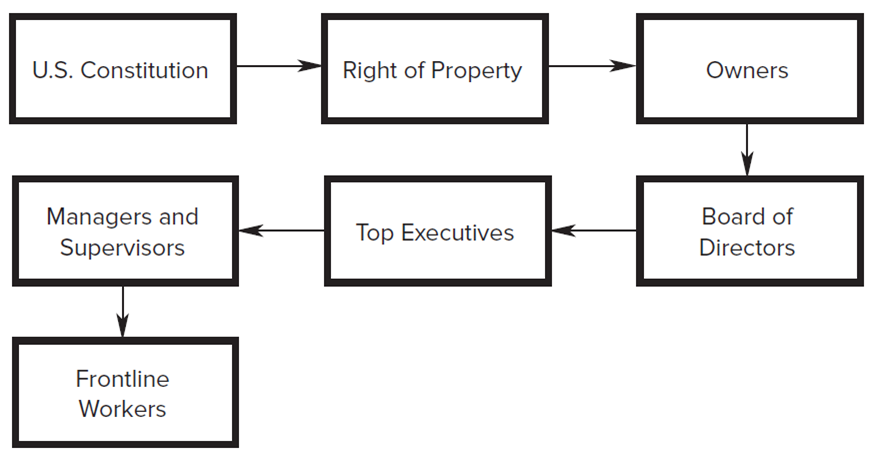
•The right of authority is derived from the right of private property
•Owners have the right to manage their affairs as they decide, as long as they do not violate the rights of others.
Further it transfers the top-down view authority in four ways:
•Owners transfer power to a board of directors
•Board appoints executives to manage
•Executives give authority to managers and supervisors
•Managers and supervisors empower employees
There is classical view of transfer authority is provided for better understanding.
BOTTOM-UP VIEW:
First described by Chester Barnard of A T and T:
•Power flows from below because people can reject a directive by saying no
•Saying yes or no affirms or denies the authority of others
There are some conditions apply in bottom-up view those conditions are important to follow on the behalf of those conditions Order will be accepted, if these four conditions are met:
•One understands the order
•One believes the order is consistent with the organization’s goals
•One believes that the order is compatible with his or her interests
•One is mentally and physically able to comply
Leaders must make sure that directives fall within their subordinates’ zones of acceptance If not, orders may be met with resistance and hostility.
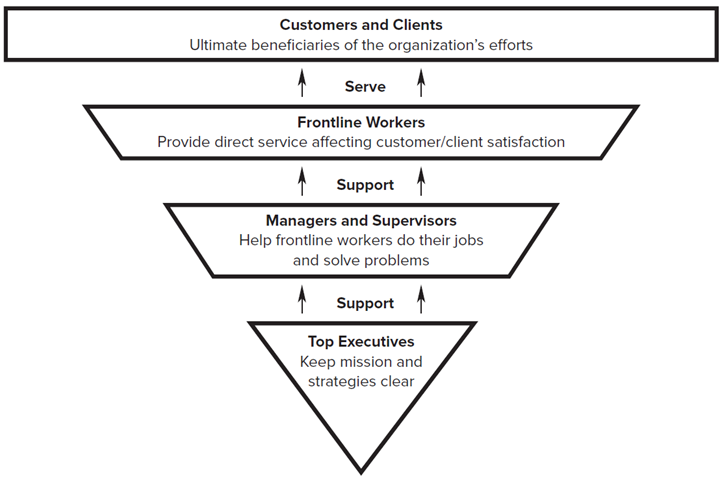
Servant leadership approach
•Recognizes both the top-down and bottom-down views and Addresses the interdependent nature of the leadership-follower condition.
There is upside-down pyramid approach of servant leadership:
Authentic Leader:
•Have a genuine desire to serve others
•Lead from core values
•Have courage and self-discipline
•Establish trusting relationships
•Are purpose driven
•Behave as they do because of personal conviction
Military Leader:
•Focus on the well-being and development of their sailors, airmen, marines, and coast guards
•Put the needs of their subordinates above the needs of their own
•Lead by principle
Continuum of Empowerment:
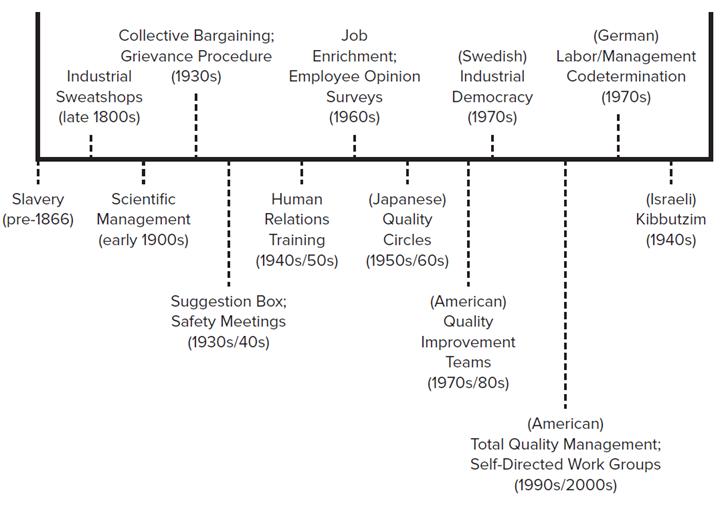
Work systems and techniques for employee participation are arranged along a continuum.Employees on the left have less power and involvement in decision-making. Employees on the right are more involved, yet not so participative that owners and managers fear loss of power and ownership.
Psychological Size:
Has relevance for people in authority positions
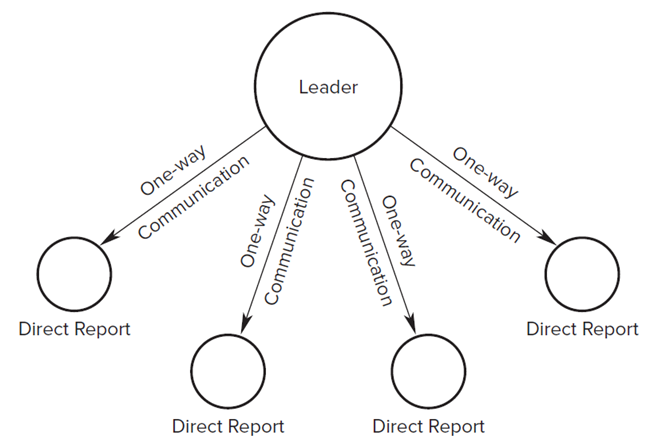
•Power can influence the communication process
•Employees are in a weaker position and depend on the leader
•Relationships can be affected •People may fear a leader’s power and inhibit their behavior
Abuse of Psychological Size
All in all this was chapter 8 in which we have learnt about the what authority a leader should have. if you guys have any question please ask it will be a honor for me to answer them. For more information stay connected.
 Richa's blog