
ETHICS refers to the persons morals and values. There are some perspective on the leadership ethics.
There are three theories on leadership ethics are:
•Heifetz’s theory: Leadership involves the use of authority to help followers uphold values in the workplace
•Burns’s theory: Transformational leadership emphasizes the moral development of followers and maintenance of high standards of ethical conduct
•Green-leaf’s approach: Leadership has strong ethical overtones, with the premise that true leadership is service to others.
ROOTS OF ETHICS: There are two types of ethics are: SECULAR ETHICS AND RELIGIOUS ETHICS.
SECULAR ETHICS:
Aristotle shaped the ethics of Western civilization from a secular orientation
•Human beings are rational
•Rationality is the most significant trait distinguishing humankind from other creatures
•The good person is the one who lives most rationally and whose moral judgments and social conduct are born of contemplation and reason
RELIGIOUS ETHICS: Religious ethics are describe in two traditions explained below:
TRADITIONS 1:
Saint Augustine had the greatest influence on Western religious thought than any other writer outside biblical scripture
•The naturally evil inclinations of humanity can be overcome only by divine grace
•If we are drawn to God through faith, we will overcome our immoral nature, and be reconciled in heaven
TRADITION 2:
Christian philosopher, Thomas Aquinas, believed that:
•People are endowed with a natural desire to be good
•This desire is present in all people and is impossible to destroy
•If individuals follow God, they will fulfill their nature and be good
•People will be moral and experience the greatest meaning of which they are capable by acting out goodness in their day-to-day lives.
ETHICS, HUMANKIND AND OTHER ANIMALS:
Ethics is a concern unique to humankind as People combine emotion with knowledge and through abstract reasoning produce a moral conscience
•Ideas of right and wrong have prehuman origins
•Humans can distinguish between what is and what ought to be
Self-sacrifice, sympathy, and cooperation are seen in other species
There are two levels of morality:
MORALITY level 1:
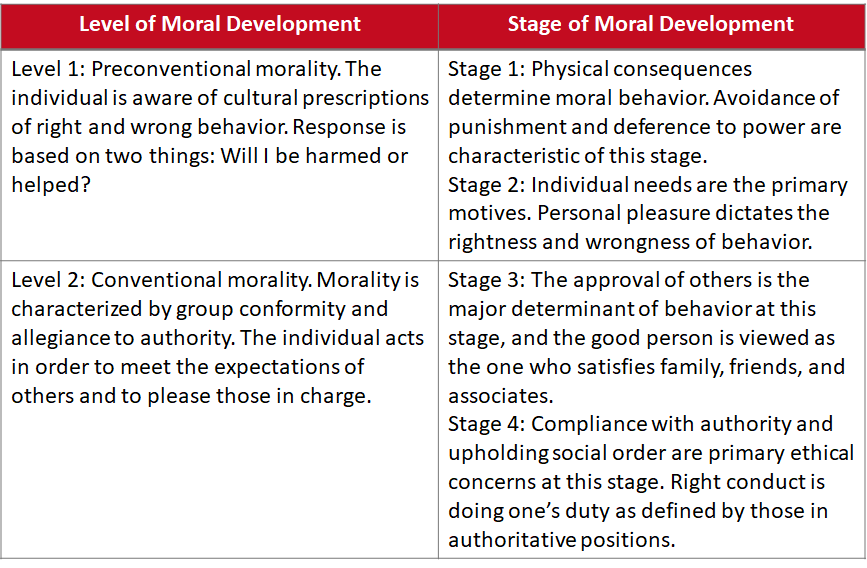
MORALITY level 2:
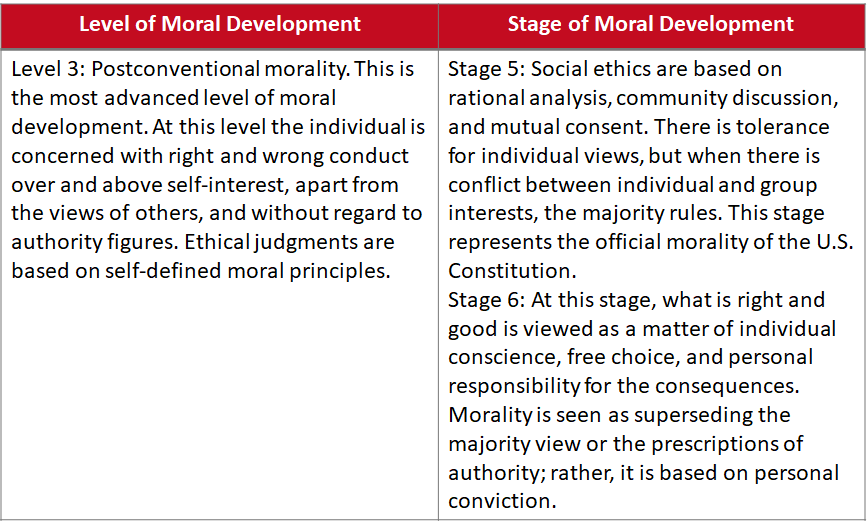
MORALITY IN HISTORY:
Level 2, stage 4 moral reasoning
•Nazi death camps: Adolf Eichmann testified, “I carried out my orders”
Level 3, stage 6 morality
•Civil disobedience: Mohandas Gandhi, the Indian spiritual and political leader, addressed a British court
•Socrates refused to admit social wrong, committed suicide, and became a moral hero that inspired Western civilization .
LESSONS IN OBEDIENCE:
Presence of authority can cause people to:
•Perform inhuman acts
•Follow morally offensive orders
Influence of leaders can be so strong as to cause followers to sacrifice their lives for a cause.
All in all this was the blog of leadership ethics for more information stay connected with me. thank you.
 Richa's blog